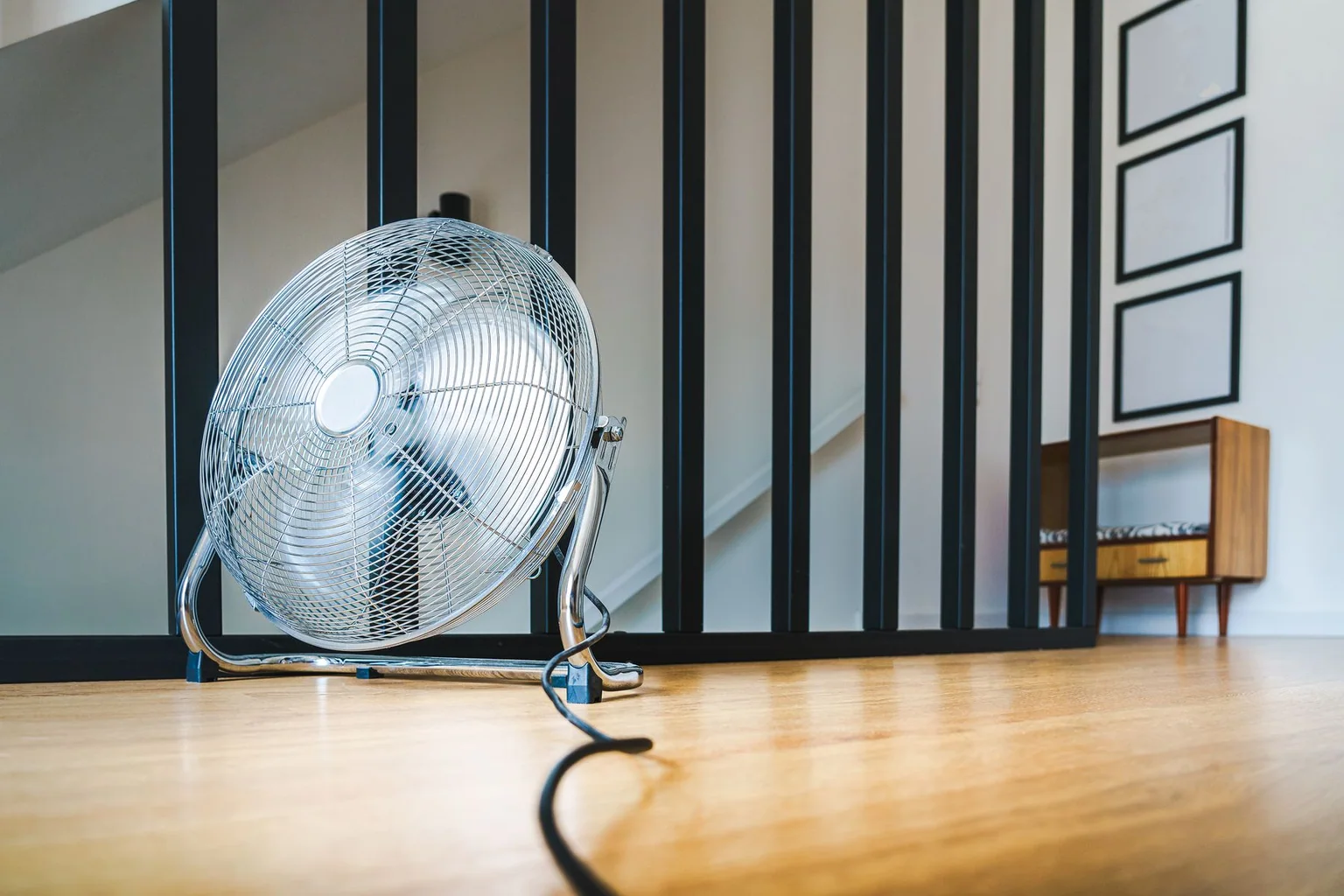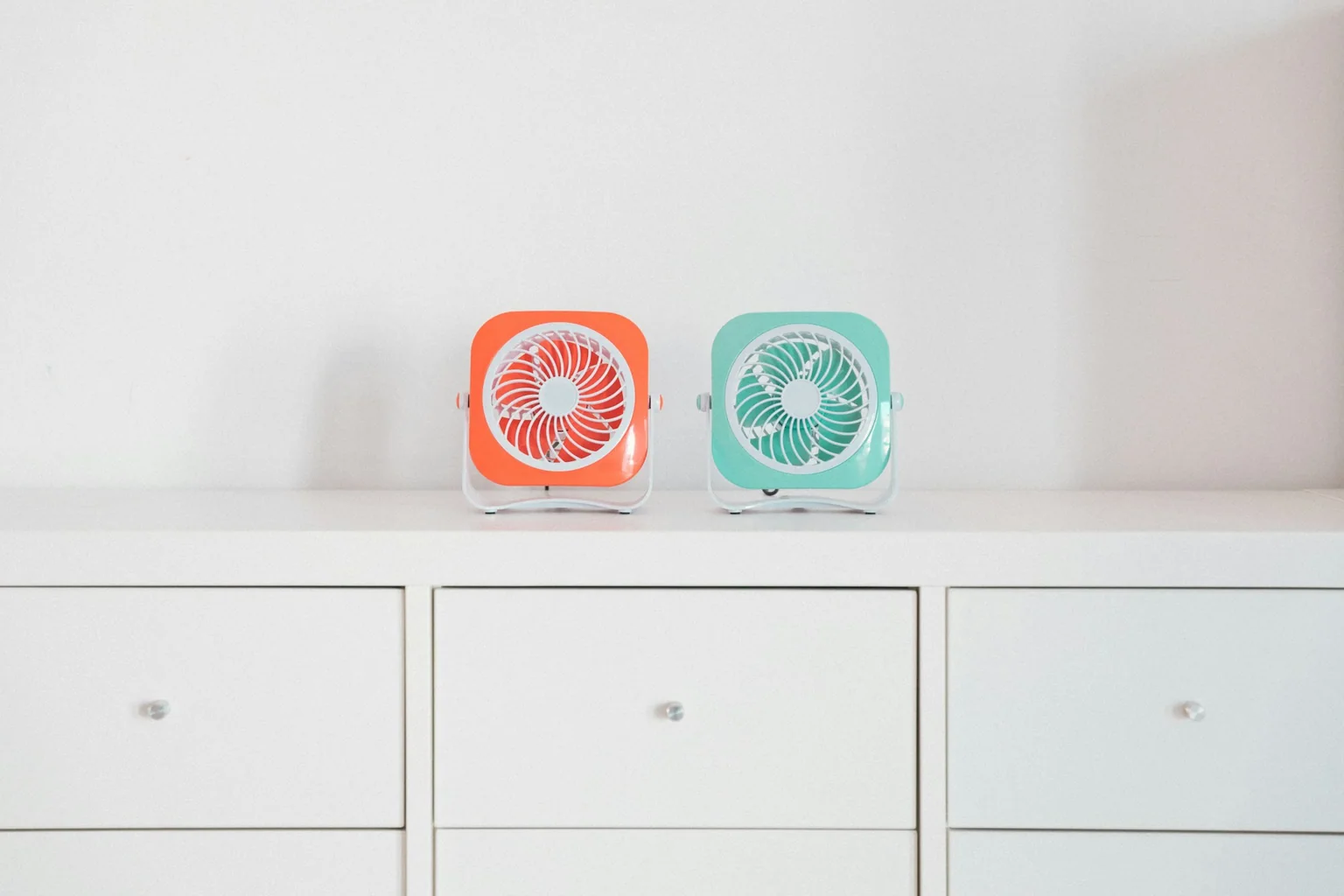
Fans can improve comfort and distribute conditioned air, but they do not reduce room temperature like refrigeration. The best shape depends on whether air should reach one seat, travel across a large room or mix warm and cool zones.
We compared current manufacturer documentation for airflow approach, speeds, controls, cleaning and footprint. We did not measure cubic feet per minute or sound, so brand claims are not converted into a lab-style rank.
Quick picks
| Product | Best for | Key feature | Price tier |
|---|---|---|---|
| Vornado 660 Large Air CirculatorBest large-room circulator | Mixing air across living rooms and open spaces | Deep-pitched blades and focused circulation pattern | Premium |
| Lasko 20-inch Wind MachineBest high-volume floor fan | Garages, workout spaces and fast directed airflow | Large pivoting floor-fan body | Budget |
| Honeywell TurboForce HT-900Best budget personal circulator | Desks, nightstands and small rooms | Compact pivoting head with wall-mount option | Budget |
| Vornado 460 Small Air CirculatorBest compact step-up | Bedrooms and offices needing more reach than a desk fan | Small circulator with a deep pivoting head | Mid-range |
Our researched picks
Best large-room circulator
Vornado 660 Large Air Circulator
The 660 is designed to project a focused stream that can circulate through a room rather than only breeze directly on one person. Its simple four-speed control avoids app and remote complexity.
Key specifications
- Large tabletop or floor circulator
- Four manual speeds
- Multi-direction pivoting head
Pros
- Strong circulation use case
- Simple controls
- Adjustable direction
Cons
- No remote or timer
- Premium for a manual fan
- Focused stream may feel intense nearby
Best high-volume floor fan
Lasko 20-inch Wind Machine
The Wind Machine is a conventional large floor fan for buyers who want a broad direct stream and simple manual controls. It is less discreet than a tower but easier to understand and position.
Key specifications
- 20-inch class floor fan
- Pivoting head
- Three manual speeds
Pros
- Large airflow opening
- Simple operation
- Good value for utility spaces
Cons
- Bulky round footprint
- Can be loud at high speed
- No timer or remote
Best budget personal circulator
Honeywell TurboForce HT-900
The HT-900 is inexpensive, compact and adjustable enough for personal airflow or helping distribute conditioned air in a small space. Its controls are basic, which is often appropriate at this size.
Key specifications
- Compact air-circulator body
- Three speeds
- Pivoting head and wall-mount capability
Pros
- Small footprint
- Accessible price
- Flexible direction
Cons
- Limited room reach compared with larger models
- No timer
- Mechanical sound is noticeable nearby
Best compact step-up
Vornado 460 Small Air Circulator
The 460 sits between a tiny personal fan and the large 660. It makes sense for a bedroom or office where directed circulation is useful but a large floor fan would dominate the space.
Key specifications
- Small-room circulator format
- Three manual speeds
- Adjustable pivoting head
Pros
- Compact but circulation-focused
- Straightforward controls
- Easy to reposition
Cons
- No remote or timer
- Costs more than basic desk fans
- Not intended for whole-house cooling
How we evaluated
We organized picks by airflow job: large circulation, utility-floor airflow, personal use and compact room circulation. Control simplicity, pivot range, footprint and published care mattered more than feature count.
We did not reproduce unstandardized airflow or quietness claims. Room shape, obstructions, surface vibration and listening distance can change perceived performance.
Buying guide
Define the airflow target
Choose personal breeze, room circulation or utility airflow before comparing size and controls.
Use the lowest effective speed
Lower speeds usually reduce noise and energy while still improving comfort near occupants.
Plan a circulation path
A circulator needs space at the intake and a clear route through the room; avoid trapping it behind furniture.
Check grille cleaning
Dust buildup affects airflow and sound. Follow the manual and unplug before any cleaning.
Know the heat limits
A fan can be unsafe as the only response to extreme heat for vulnerable people. Follow local public-health advice.
FAQ
What is the difference between a fan and an air circulator?
A conventional fan often delivers a direct breeze; an air circulator is shaped to move a focused stream through a room. Marketing terms still vary by brand.
Does a fan make a room colder?
It does not remove heat. Air movement can improve comfort and help distribute cooled air.
Where should I place a fan?
Give the intake clearance and aim the stream toward the occupied area or along a room path, following the manufacturer’s stability and moisture guidance.
Can I leave a fan running unattended?
Follow the manual and local electrical-safety guidance. Stop using any fan with heat, odor, damaged cord, unstable operation or unusual noise.
What we would prioritize
Vornado 660 suits large-room circulation, Lasko delivers utility airflow, Honeywell covers personal value and Vornado 460 is the compact step-up. Match the fan to the airflow job and placement.
Sources and verification
Product availability was checked on . Manufacturer pages remain the final reference because specifications and compatibility can change.
- CDC — heat and health — Limits of fan use and the need for safer cooling during extreme heat.