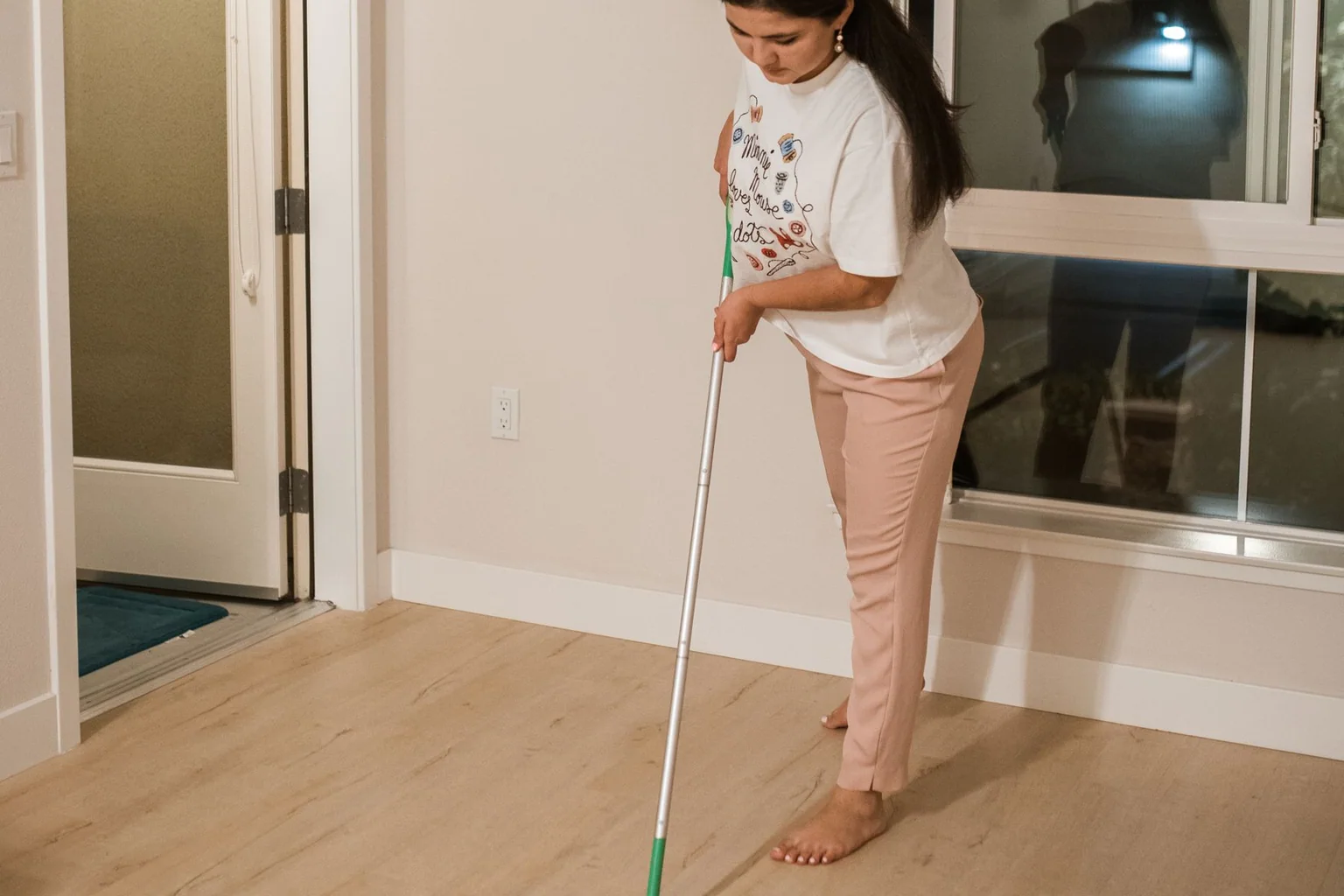
Hardwood floors vary by species, finish, installation and age. A mop can be well designed and still be wrong for an unsealed, waxed or damaged surface. The first source should be the flooring manufacturer or installer—not the bottle label alone.
We compared current mop systems for moisture control, pad design, wringing, cleaning-solution flexibility and replacement supplies. We did not test these mops on a controlled floor sample, so no scratch, shine or residue claims are presented as our results.
Quick picks
| Product | Best for | Key feature | Price tier |
|---|---|---|---|
| Bona Premium Spray Mop for Hardwood FloorsBest dedicated spray system | Routine cleaning of compatible sealed wood | Refillable cartridge and washable microfiber pad | Mid-range |
| O-Cedar ProMist MAXBest solution-flexible spray mop | Users who want a refillable bottle | Dual-sided washable pad with manual spray | Budget |
| Swiffer PowerMop WoodBest convenient disposable-pad system | Quick cleaning with minimal pad handling | Powered spray with wood-oriented pads and solution | Mid-range |
| O-Cedar RinseCleanBest bucket system with moisture control | Larger areas where a spray mop is too slow | Foot-pedal wringing and separated clean-water system | Mid-range |
Our researched picks
Best dedicated spray system
Bona Premium Spray Mop for Hardwood Floors
Bona combines a controlled spray pattern with a wide washable pad and a wood-floor-specific cartridge. It is convenient for frequent light cleaning when the flooring maker permits the solution.
Key specifications
- Manual trigger spray
- Reusable microfiber cleaning pad
- Refillable solution cartridge
Pros
- Good moisture control
- Wide cleaning head
- Washable pad
Cons
- Solution compatibility must be checked
- Cartridge system adds ownership cost
- Large head is less agile in tight corners
Best solution-flexible spray mop
O-Cedar ProMist MAX
ProMist MAX uses a refillable bottle and a double-sided microfiber head, reducing dependence on one proprietary solution. That flexibility is useful only when the chosen cleaner is approved for the exact floor.
Key specifications
- Refillable spray bottle
- Dual-sided microfiber pad
- Manual trigger with no batteries
Pros
- Affordable
- Reusable pad
- User-selectable compatible solution
Cons
- Easy to mix an unsuitable cleaner
- Bottle seals need maintenance
- Pad can hold grit if not rinsed
Best convenient disposable-pad system
Swiffer PowerMop Wood
PowerMop Wood targets convenience with a prepared cleaning system and disposable pads. It suits users who prioritize quick setup, while the ongoing consumables and exact floor compatibility remain tradeoffs.
Key specifications
- Battery-powered spray
- Disposable wood-floor pad
- Purpose-specific solution bottle
Pros
- Fast setup
- No dirty pad storage
- Narrow profile
Cons
- Ongoing pad and solution waste
- Proprietary consumables
- Not universal for all wood finishes
Best bucket system with moisture control
O-Cedar RinseClean
A spin mop can be appropriate for sealed hardwood when the head is wrung very dry. RinseClean separates clean and dirty water, but it still demands more moisture discipline than a spray mop.
Key specifications
- Foot-pedal spin wringer
- Microfiber string-mop head
- Separate clean- and dirty-water chambers
Pros
- Adjustable wringing
- Covers larger areas
- Washable replacement heads
Cons
- Bulky storage
- Higher spill risk
- User can leave the mop too wet
How we evaluated
We prioritized moisture control, pad cleanliness, solution flexibility, replacement availability and storage. We included one bucket system but treated user-controlled wringing as a risk as well as a benefit.
We did not make universal finish-safety claims. Warranty and care rules differ, and existing gaps or coating damage can allow water intrusion even during careful damp mopping.
Buying guide
Identify the finish
Sealed polyurethane, oil-finished, waxed and unfinished wood require different care. Find the installer or maker instructions.
Remove grit first
Vacuum or dry-mop debris so the wet pad does not drag abrasive particles across the surface.
Control moisture
Use a fine spray or a thoroughly wrung pad. Wipe any droplets and avoid liquid collecting at board seams.
Keep pads clean
Change or rinse pads before they become loaded with grit. Follow washing instructions and avoid fabric softener if prohibited.
Be cautious with steam
Steam can drive heat and moisture into seams and finishes. Use it only if the floor manufacturer explicitly allows it.
FAQ
Can I mop hardwood with water?
Many sealed floors allow carefully controlled damp cleaning, but standing water is risky. Follow the exact floor care guidance.
Is vinegar safe for hardwood?
Not universally. Acidity and concentration can affect finishes, so do not use a homemade solution unless the floor maker approves it.
How often should hardwood be wet-cleaned?
Dry soil removal can be frequent; damp cleaning should be based on need and care instructions rather than a rigid schedule.
Are disposable pads better?
They simplify cleanup and reduce cross-contamination, but cost more over time and create waste. Washable pads work well when cleaned properly.
What we would prioritize
Bona offers a dedicated wood-floor spray system, ProMist adds solution flexibility, Swiffer favors convenience and RinseClean suits larger areas with careful wringing. The floor’s finish rules remain decisive.
Sources and verification
Product availability was checked on . Manufacturer pages remain the final reference because specifications and compatibility can change.
- National Wood Flooring Association — maintenance — General professional guidance for wood-floor care.